
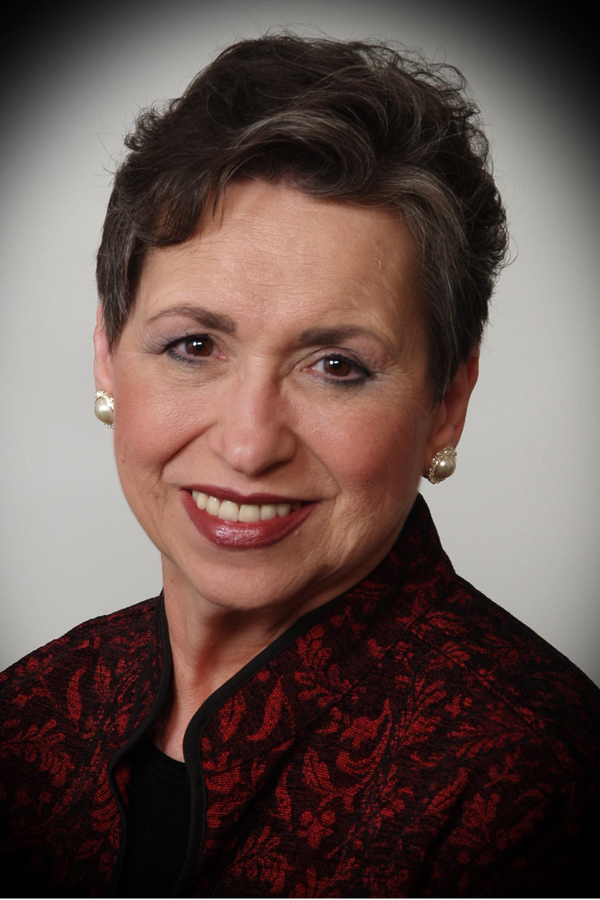
Karen Nevins, M.A. in Performance
"Music is like a feather on the breath of God" (Hildegard von Bingen)
Welcome to karennevins.com
Announcing Sound Resonance w/ KareN!
As many know, I am a cancer survivor, thankful to be cancer free since February, 2018! With no chemo therapy or radiation, I have survived cancer through the a tenacious regimen of nutritional and homeopathic therapies and biofeedback. When I recently learned that that my Biofeedback practitioner was retiring, I decided to purchase the newest ScioQx Biofeedback system. I knew doing so would allow me to continue my own regimen, while serving friends and family. With the developing passion of my own personal Biofeedback, I've been preparing for full certification as a Homeopathic Therapist and Quantum Biofeedback Practitioner. I'm now thrilled to be developing my own flock of clientele as I continue toward my CBT and continue toward certification in Intermediate, Advanced and Specialist Certifications. I am conducting my services on scheduled appointments and I can drive to serve those in physically disabled need. Anyone wishing to know more about the Biofeedback process or wishing to schedule an appointment for your own session, please reach out to karen@karennevins.com or send a text to my cell: 734-730-0007. With today's technology and the challenges of distancing due to COVID-19, I am able to offer virtual sessions based on two collective DNA options. I'll certainly welcome your call! Friends, family and music colleagues are certainly welcome to explore these wonderfully sophisticated and FDA approved homeopathic therapies for your own needs!
The Retirement Life
Retired since August, 2013, I have spent recent years since retirement, teaching private voice, judging Michigan School Vocal Music Association (MSVMA) competitions, and serving as Music Director for Light of Christ Parish in BLissfield and Deerfield. In January 2015 I was honored to receive the Michigan School Vocal Music Association's Emeritus Membership Award after twenty years of active membership in the organization. Having taught for two years at Grass Lake Public Schools my last eighteen years of teaching choral music was spent at Lincoln Consolidated Schools. My warmest thanks go to the the wealth of beautifully gifted high school students (and parents) who shared your talents with me all those years! So many of you are, and will remain, some of my best lifetime friends and leave me with lasting memories! And with this huge life change, I look forward to spending more time with our three married children and ten grandchildren! I also look forward to exploring new and exciting musical and artistic opportunities with Carillon Women's Chorale! Meanwhile, many jewelry making and loom weaving supplies purchased over the past few years are patiently awaiting my artistic attention and exploration! As I review my new goals, it seems that little grass will grow under my feet!
Carillon Academy of Music
So in light of the saying, "Once a teacher, always a teacher," I will continue to teach privately and serve as clinician and adjudicator to the younger generations of choral teachers! Clinics and private instruction can be scheduled and available to adults, and to home schooled and other school students (with music teacher recommendation). Lessons can be taken in my home studio, at Adrian College or as arranged on an individual basis. With adequate interest, both small and large ensembles can be formed to participate within the community and in MSVMA Festivals. For more information, please contact karen@karennevins.com. I'll look forward to arranging an audition and scheduling lessons and group workshops!
Coming Full Circle!
In August, 2013 I was also hired to the position of Music Director at Light of Christ Catholic Parish in Blissfield and Deerfield. Having grown up in St. Peters (Blissfield) and having spent many family events at St. Alphonsus, I am pleased to work with liturgist, Margaret O'Malley as we collaborate to draw on the talents of both sites for the good of Light of Christ Catholic Parish.
Recently I learned of some new research that substantiates the incredible validity of what we do as singers and choral directors! In fact, it validates choral singing as a system of physical and mental support. In the research heart monitors were placed on each singer of the choir. When music was started, all singers were functioning independently and as the music progressed and breathing became synchronized as required for unified phrasing, so did their hearts become synchronized! This is an amazing revelation that should not--CANNOT--be ignored!
As school music programs are being cut, I look at my own life and the lives of my children to ask, "what would life have been without our music?" While I sang my first performance at age five at my grandparents 50th wedding anniversary, I studied instrumental music more seriously through middle school and high school. Instrumental music and associated achievements were beautifully gratifying, but eventually my appreciation for poetry and the harmonies of voice drew me toward choral music. Ultimately, choral music allowed me to develop beautiful texts through music, synthesizing a higher art form.
Unlike the handheld instrument, the voice is God given and most unique. It must be gently nurtured for a healthy mastery of resonance. The art of beautiful singing is truly scientific. The drive to sing well requires a deep musical passion and persistence toward excellence. A singer's goal is to develop maximum resonance. This skill requires tenacity toward developing the clarity of hard (healthy) onset and resonant perfection. When nurtured and cultivated, the voice is an instrument we can carry with us throughout a lifetime. Why else, aside a deep love of the art of singing and from passion for putting beautiful texts to music, would a non-traditional student have exhausted all musical options at church and in the community to find herself pursuing a 5-1/2 year degree program in music education? Any person who feels emotionally and physical fed by his/her music should be encouraged to sing for a lifetime!!
Today and throughout history in every culture, our societies have utilized music to celebrate every life event. In medieval times, music was NOT taught with Reading and Language as one might think. In the earliest ancient educational archives, music was recorded as being taught with mathematical sciences such as astronomy, geometry, and arithmetic. After all, music is the science of sound and requires a strong knowledge of physical anatomy and the application of precise and cognitive mathematics processes. Because vocal music utilizes text, it also supports improved reading skills, expressive phrasing and is integral to an applicable understanding of syllabic stress through cognitive rhythmic subdivision. In fact, some of the most recent research reveals that when singers with a choir were monitored, their unified breathing and feeling of the pulse also unified their heart rates! Thus, fulling the element of harmonious physical unification and true belonging. Additionally, the articulation of all cultural languages are utilized in choral/vocal music by which the universal International Phonetic Alphabet can be applied.
In a nutshell, choral music is one musical art form that permits hands-on integration of the science of voice (anatomy), acoustics and sound (physics), mathematics through rhythmic counting and cognitive subdivision, history and cultural trends through the ages, cognitive multi-tasking, a clear recognition and understanding of historical (Italian) musical terms, muscular/physical exertion through oral and pharyngeal soft-tissue coordination, coordinated breathing, rhythmic movement and oxygenation. Likewise, the use of the International Phonetic Alphabet provides a clear understanding of language variations. Rhythmic application of the text and syllabic stress facilitate improved speech articulation and musical aesthetics and dynamic sensitivity with a goal of beautiful tone painting.
Within the competitive music classroom flows the development of critical life skills, improved self-confidence and self-respect, and goal setting with a persistence toward excellence through the team effort. Over the decades, music that was once identified and taught as a science or math at the elementary or secondary levels, is considered an elective when, for many students, it is the music class and "choral family" that draws them to the school each day.
As state mandates override our childrens' choices for electives with changing curriculum, I can still recall how a single piece of music or a beautifully tuned chord peaked sensitivity in me, bringing tears to my eyes as a young musician in band and choir. In my precious Interlochen Arts Academy All-State experience as a high school sophomore, the haunting tones of a bassoon playing in a nearby woods impressed a lasting memory that will carry me to my grave. Likewise, my daughter's 1998 MSVMA State Honors Choir experience changed her life.
Today's young people deal with personal struggles we could not fathom in our youth and hopefully they have found sanction in my choral classroom. I've been told by many adults that their high school music experiences are the memories they hold most dear to their hearts when all else was forgotten. Why then, do must music educators struggle to assure that school music programs survive? May all who support the performing and fine arts, recognize the importance assuring enriched art education for today's youth and continue to speak out for your politicians to save the arts.
Below are my vocal/choral clinician and adjudication offerings:
- Private Solo and Group Voice Instruction--All Levels
- Veteran Choral Adjudication and Clinician Specialist;
- Church Choir Clinician
- English and Foreign Language Diction Specialist.
- International Phonetic Alphabet for diction, vowel modification and resonance
- Veteran Solo Clinician Specialist
- Expressive Musical Interpretation
- Kodaly Sight Singing